
How to Staff a Trade Show Booth: The Procurement-Grade Guide
A 25-year operational playbook for staffing a trade show booth — pre-show ratios, training, venue quirks at McCormick Place, Javits, Moscone, and how the night-before brief makes or breaks your show.
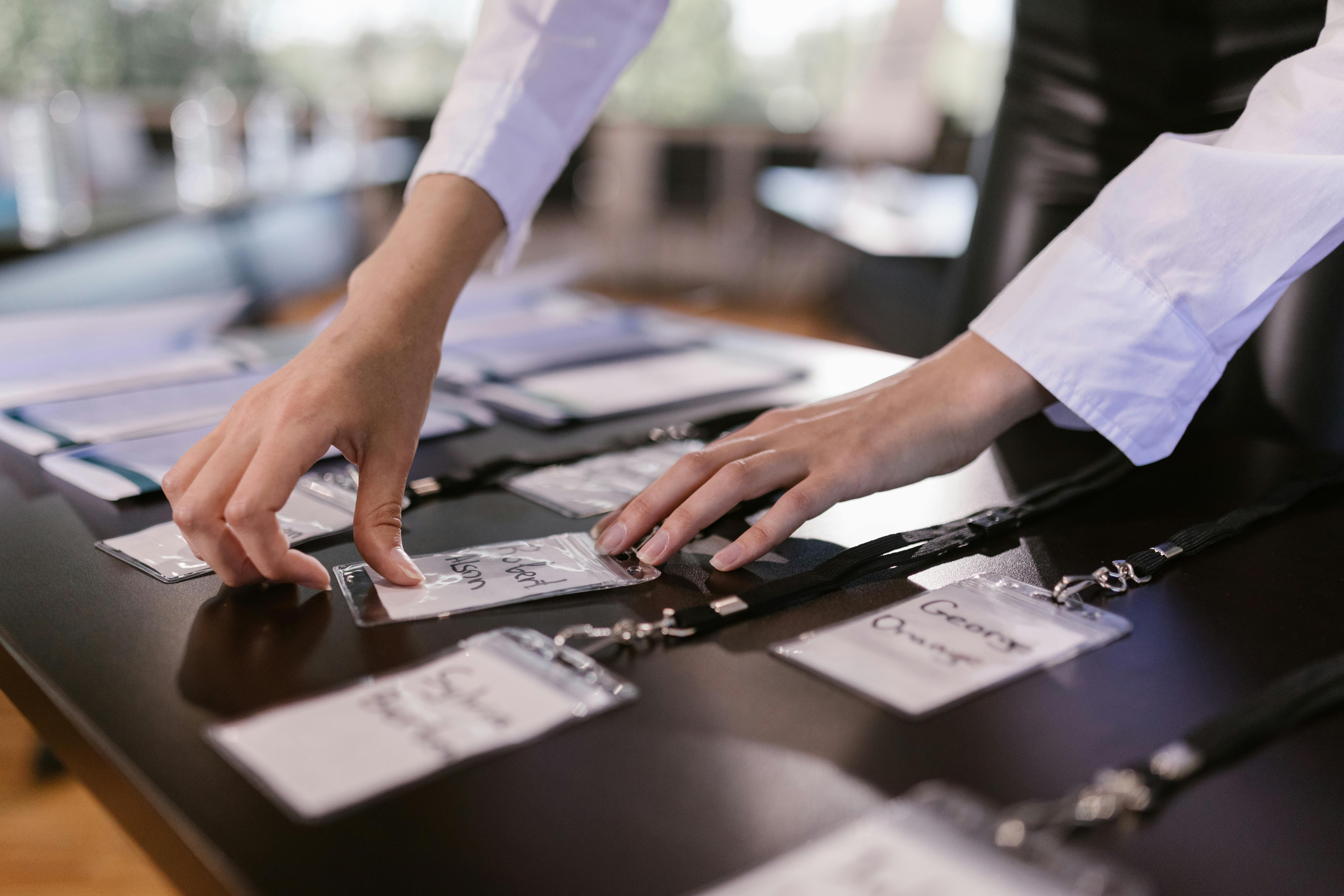
Staff a trade show booth with three distinct functional roles — greeters/qualifiers at the aisle line, demo specialists at the screen, and a dedicated captain running operations — supported by a structured two-hour night-before brief and a four-touch day-of captain workflow.
The exhibitors who win at trade shows treat staffing as a campaign, not a logistics line item. Lock booth footprint, traffic projection, ratios, skill profile, uniforms, and NDAs eight weeks out. Train staff in four blocks (brand/product, qualification script, lead capture tech, logistics) the day before doors open. Run a pre-open huddle, mid-morning floor walk, lunch rotation, and end-of-day debrief every show day. Plan for venue-specific quirks at McCormick, Javits, Moscone, and LVCC. Inside 72 hours of show close, run a written post-show debrief and keep a roster of staffers you want back next year — continuity compounds.
Why booth staffing decides your show ROI before opening day
Your booth is the smallest, most expensive retail store you will ever operate. You will run it for three to five days, in a city that is not your own, in front of an audience that has eleven other things competing for their attention every five minutes. The people standing inside that ten-by-twenty footprint are not 'booth babes' or 'warm bodies' — they are the entire customer experience of your brand for the duration of the show.
After eighteen years staffing trade shows across CES in Las Vegas, NRF in New York, Dreamforce in San Francisco, AWS re:Invent, RSA, HIMSS, SHRM, NACS, IBS, and dozens of regional B2B shows, the pattern is consistent: the exhibitors who treat booth staffing as a logistics afterthought leave qualified leads on the table. The ones who treat it as a campaign — with a captain, a script, a brief, and a daily debrief — convert traffic into pipeline.
This guide is the procurement-grade version. It is what we hand to a director of field marketing who has to defend the staffing line item to a CFO, and it is what we walk a first-time exhibitor through the night before doors open at McCormick Place.
The three roles every booth needs (and why most exhibitors only staff one)
Walk any major show floor and you will see the same mistake repeated: every person in the booth is doing the same job. Usually that job is 'stand near the demo and look approachable.' That is not staffing. That is decoration.
A trade show booth needs three distinct functional roles, even if one person wears two hats at a small booth:
- Greeters / qualifiers — positioned at the aisle line. Their job is to engage every passerby within three seconds, run a 15-second qualification, and either route the lead to a demo specialist or capture a badge for follow-up. They never demo. They never close. They route.
- Demo specialists / subject matter experts — they live at the screen, the product, or the experience. They take qualified leads from the greeters and run a 5-to-12-minute interaction. Usually a mix of agency-provided talent and your own product team or sales engineers.
- Lead capture and operations — the captain. One person owns the badge scanner workflow, the lead routing, the swag inventory, the breaks schedule, the bathroom rotations, and the daily sync with show services. On a small booth, this is your event marketing manager. On a 20×20 or larger, it is a dedicated role.
Pre-show staffing decisions: what to lock 8 weeks out
By the time you are eight weeks from doors-open, the following decisions need to be made and documented in your run-of-show. We have watched exhibitors try to make these calls on the show floor at 7:45 a.m. on day one. It does not go well.
- Booth footprint and traffic projection. Confirm your linear feet of aisle exposure and request the prior year's traffic estimate from show management — most major shows (CES, NRF, Dreamforce) publish per-hall traffic data.
- Hours of operation, including any pre-show member previews, after-hours receptions, or partner pavilions that extend your day.
- The staffing ratio. We cover the math in our separate trade show staffing ratio guide, but the short version: greeters scale with aisle exposure, demo staff scale with simultaneous demo capacity, and one captain covers everything up to roughly twelve floor staff.
- Skills profile. Do you need product expertise, language coverage (a must at CES and Mobile World Congress), or specific industry credibility (clinical at HIMSS, security at RSA, finance at Money 20/20)?
- Uniform / dress code. Branded polo, full suit, costumed activation? Lock this so wardrobe is ordered with shipping buffer.
- Background and NDA requirements. Most enterprise booths require a signed NDA before staff see pre-release product. Defense, healthcare, and financial services often layer in background checks.
W-2 vs. 1099 — why this matters more on a show floor than anywhere else
Trade shows are one of the highest-risk environments for worker misclassification, because the booth captain — yours or the agency's — is directing the work in real time. They are setting break schedules, correcting scripts, telling people where to stand. That is W-2 supervision behavior, full stop.
If your staffing partner is sending you 1099 contractors and then directing them like employees on the show floor, you are inheriting the misclassification exposure. In California (AB 5), New Jersey, Massachusetts, and Illinois, that exposure is acute. Even outside those states, the IRS 'right to control' test applies. We work exclusively W-2 for this reason, and our W-2 vs 1099 risk guide covers the legal mechanics in detail.
Training: the four blocks every booth staffer needs before they touch the floor
Training is where most exhibitors quietly cut corners and then wonder why their leads were unqualified. The minimum viable training block for a booth staffer is two hours, delivered the day before doors open, in-person, at the booth or in a nearby meeting room.
- Brand and product block (30–45 min). Your elevator pitch, the three things you want every attendee to remember, the live demo flow, the questions you do not want to answer (competitive positioning, unreleased features).
- Qualification script block (30 min). The exact opening line, the 3–5 BANT-style qualification questions, and the routing decision tree: who gets a demo, who gets a brochure and a badge scan, who gets politely waved through.
- Tech block (20 min). Hands-on with the lead capture device or app. Where is the QR scanner? What happens if it crashes? Where do business cards go? Who has the spare iPad?
- Logistics block (15 min). Break rotation, bathroom locations, the rally point for end-of-day debrief, the freight elevator schedule for breakdown, the emergency contact for show services.
The night-before brief
The single highest-leverage hour of the entire show is the brief the night before doors open. Get everyone — your team, the agency staff, the AV vendor, the demo presenters — in one room. Walk the agenda. Walk the booth. Walk the floor.
We run a checklist: badges picked up, lead capture devices charged and tested with a fake scan, demo stations powered on, swag stocked, branded wardrobe distributed and fits confirmed, NDAs signed and filed, captain's contact info distributed to every staffer's phone, hotel-to-venue commute time confirmed, and a hard call time for the morning that bakes in 45 minutes of buffer.
At McCormick Place, factor in the walk from the South Hall to your booth — it can be a 15-minute hike from the badge pickup area to the back of the hall. At the Javits Center, the elevator queue from the lower level lounges at peak times will eat your call time alive. At Moscone, the Howard Street crossing between North and South can add ten minutes during Dreamforce.
Day-of captain workflow: the four-touch day
Your captain runs the booth in four scheduled touchpoints, in addition to constant floor presence. This rhythm is the difference between a booth that gets sharper every day and one that loses energy by lunch on day two.
- Pre-open huddle (15 min before doors). Headcount, wardrobe check, lead capture system live, daily traffic forecast, any VIP appointments on the calendar, the one thing we are doing better than yesterday.
- Mid-morning floor walk. Captain leaves the booth at ~10:30, walks the surrounding aisles and competitor booths, takes notes on traffic patterns and competitive activity, returns by 11.
- Lunch rotation oversight. Five-hour shift minimum is industry standard; staff need a real 30-minute break, not a sandwich-at-the-booth break. The captain holds the line on this.
- End-of-day debrief (15–20 min after doors close). Lead count, top three quotes from attendees, what worked, what we are changing tomorrow, who needs a different placement, who is sick or losing their voice and needs a swap.
Venue-specific operational notes
Every major U.S. convention venue has quirks that will eat your day if you do not plan for them. A non-exhaustive but representative list from shows we have staffed:
- McCormick Place, Chicago. Teamsters jurisdiction on freight, electricians on power drops, carpenters on booth assembly. Exhibitor-appointed contractors must file in advance. Empty crate return at end-of-show can take two-plus hours on the last day — your breakdown crew needs to plan for it.
- Javits Center, New York. Carpenters Local 829 on installation, Teamsters on freight. Loading dock access at the back of the building, not the front. NRF and ICFF traffic patterns are radically different even though they use the same halls.
- LA Convention Center. IATSE jurisdiction for many activations, especially anything with AV or rigging. Anime Expo, E3-legacy shows, and trade-only shows have very different floor cultures.
- Anaheim Convention Center. NAMM week is a unique animal — load-in starts in the parking structures, and the freight elevators are the bottleneck. Music industry shows run later into the night than most B2B shows.
- George R. Brown, Houston. OTC (Offshore Technology Conference) takes over the entire complex and the surrounding hotels — staffing housing must be booked the prior year.
- Moscone Center, San Francisco. Dreamforce footprint spans Moscone North, South, and West plus tent activations on Howard Street. Your booth staff may need to cover satellite spaces.
- Las Vegas Convention Center and Mandalay Bay. CES sprawls across LVCC, the Venetian Expo, and adjacent hotels. Staff transportation between halls is a real line item — budget shuttle time into your shift schedule.
- Orange County Convention Center, Orlando. HIMSS, IAAPA, and PGA Show each have specific clinical, attractions, and apparel exhibitor cultures. Get the right talent profile.
Tier 1 shows vs. regional B2B: how staffing changes
A CES, Dreamforce, NRF Big Show, AWS re:Invent, or RSA Conference is a different operating environment from a regional show like NACS in Atlanta, IBS in Las Vegas, or a state-level association conference.
At Tier 1 shows, your booth staff needs to handle a higher volume of qualified traffic per hour, a more sophisticated attendee, and frequently a press or analyst conversation that requires escalation discipline. Greeters at CES need to identify and route a Gartner analyst differently than a curious vendor.
At regional B2B shows, the staffing math flips. Traffic is lower, but the per-conversation depth is higher. You need fewer greeters and more demo capacity per staffer. The 'wandering executive' is your highest-value lead and you cannot afford to have them walk past because your one greeter is mid-conversation.
Lead capture, badge scanning, and the 48-hour follow-up window
Whatever lead capture tech you use — Cvent LeadCapture, iCapture, Salesforce Events Cloud, Eventfinity, or the show's native scanner — the operational reality is that every lead has a half-life of about 48 hours after the show closes. After that, the attendee has talked to seventeen other vendors, flown home, and forgotten which booth had the espresso machine.
Your staffing plan needs to include who is responsible for daily lead export, who is enriching the leads in your CRM that night, and who is sending the first follow-up. Our trade show lead capture playbook goes deep on this.
Breakdown and post-show debrief
Breakdown is the most dangerous part of the show — staff are tired, freight crews are slammed, and the temptation to cut corners is high. Schedule it like an opening: hard call times, captain present, wardrobe collected, lead capture devices reconciled.
Inside 72 hours of show close, run a written post-show debrief: total leads, qualified leads, top three takeaways, what we change for next year, and a roster of which staffers we want back. We keep that roster across years — the best booth staffer at a given show is often the same person three years running, and continuity compounds.
The procurement summary
If you are evaluating a trade show staffing partner for an upcoming show, the questions to ask are: Are your staff W-2? Who is the captain on-site and what is their show history at this specific venue? What is your training protocol and can I see the materials? How do you handle a sick-day swap on day two? What is your COI structure and does it satisfy our show's exhibitor manual?
Our event staffing RFP checklist breaks down the procurement evaluation in depth. The short version: the cheapest staffing line item is almost never the cheapest show.
Common questions.
How early should I book trade show booth staff?+
For Tier 1 shows like CES, Dreamforce, NRF, RSA, or AWS re:Invent, book 10–14 weeks out. Top staffers in those markets are booked solid by show week. For regional B2B shows, 4–6 weeks is usually workable, though specialty profiles (technical, multilingual, clinical) need more lead time. Last-minute is possible but you lose first pick of the roster.
What is the minimum shift length for trade show booth staff?+
Five hours is the industry-standard minimum shift. Shorter shifts are uneconomical for the staffer (travel, parking, wardrobe change) and almost always violate the staffing agency's minimum call. Most show days run 8–10 hours of floor time, which means two overlapping shifts with a captain bridging both, or one full-day shift with a real 30-minute meal break.
Do trade show booth staff need to sign NDAs?+
If you are showing pre-release product, unreleased pricing, or proprietary demo flows — yes. Most enterprise booths at Dreamforce, RSA, HIMSS, and AWS re:Invent require staffers to sign an NDA before the night-before brief. A reputable W-2 staffing agency will route NDAs through their own legal and counter-sign on behalf of the staffer.
Who handles wardrobe for booth staff?+
Almost always the exhibitor. You ship branded polos, jackets, or full uniforms to the booth or the staffing agency's local hub at least one week before doors open. The staffing agency confirms sizes during booking and handles distribution at the night-before brief. For full costumed activations, the agency may provide wardrobe — confirm in the SOW.
Can the same staffing agency cover multiple cities in the same trade show cycle?+
Yes, if they are nationwide. We staff CES in Las Vegas, NRF in New York, Dreamforce in San Francisco, HIMSS in Orlando or wherever it is hosted, and regional shows across nine major metros with the same operating standard. The key question for a multi-city RFP is whether the agency has W-2 talent on the ground in each market, or whether they are flying people in (which has cost and compliance implications).
How do I handle a staffer who underperforms on day one?+
Talk to the captain at the end-of-day debrief, not to the staffer directly. A reputable agency will swap the staffer for day two without a fight. If you do not have that contractual flexibility, you have the wrong agency. We build same-day swap capacity into every show because it is going to come up — voices give out, people get sick, personalities clash.
Showcraft Editorial is the team behind every post — drawing on 18+ years of corporate event operations across 11 U.S. metros. We write for procurement teams, event marketers, and HR leaders who need to make a defensible booking decision fast.
Related guides.
How Many Staff Do You Need for Your Trade Show Booth?
Booth size × expected daily traffic × what you are actually trying to do = staff count. Here is the math, and the reason most exhibitors quietly understaff and lose qualified leads.
The Trade Show Lead Capture Playbook
Lead capture is the part of trade shows where most exhibitors quietly fail. Here is how to design a capture workflow that actually converts booth traffic into pipeline — across every major U.S. show.
W-2 vs 1099 Event Staff: A Buyer's Risk Guide
When a brand ambassador agency sends you 1099 contractors, the IRS doesn't audit the agency first — it audits the company that controlled the work. That's you. Here's how the math actually breaks down.
Ready to staff your event? on demand.
Tell us what you're producing. We'll send a quote within 24 hours, COI ready in another 24.